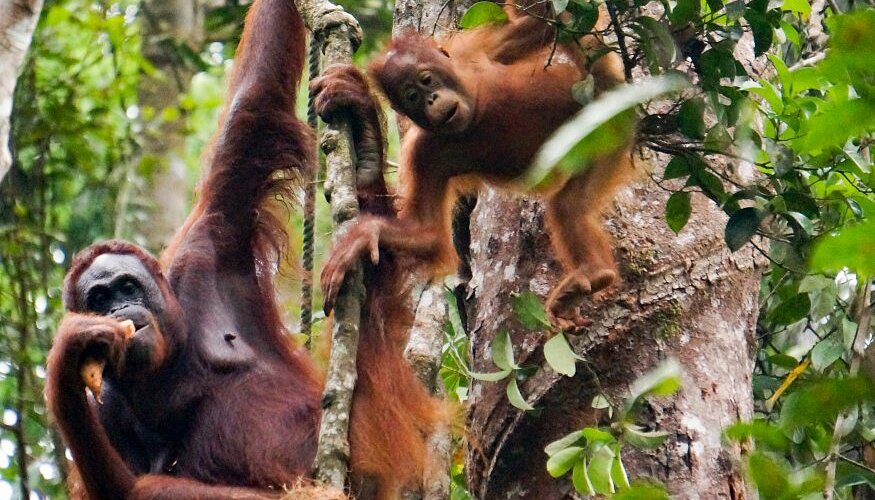
Deep in the rainforests of Malaysian Borneo, just 24 kilometers from the city of Kuching, one of the most extraordinary wildlife encounters on the planet awaits you. Semenggoh Nature Reserve is home to approximately 30–40 semi-wild orangutans — great apes that roam freely through 650 hectares of protected jungle and return to feeding platforms entirely on their own terms. Unlike a zoo, nothing here is staged or guaranteed. That unpredictability is exactly what makes it so thrilling. This guide gives you everything you need to maximize your chances of a genuine, close-up encounter with Borneo’s legendary “men of the forest.”
Understanding the Semenggoh Orangutans
Before diving into logistics, it helps to understand what kind of orangutans you’ll be meeting. The animals at Semenggoh are semi-wild, meaning they were once orphaned, injured, or rescued from captivity and then rehabilitated and released back into the reserve’s rainforest. Today, many of the orangutans living here are second and third-generation offspring born entirely in the wild to formerly rehabilitated mothers.
Because they are semi-wild, these orangutans are not confined to enclosures. They spend most of their lives high in the forest canopy, finding their own food, building nests, and living as nature intended. Rangers provide supplemental food twice daily — not to make the orangutans dependent, but as a safety net during periods when natural food in the forest is scarce. The fact that Semenggoh’s orangutans increasingly don’t show up for feeding is actually celebrated as proof the rehabilitation program is working.
The reserve’s most famous resident is Ritchie, the imposing alpha male who weighs around 140 kg and commands the territory with calm dominance. Visitors who witness him swinging down from the canopy often describe it as one of the most powerful wildlife moments of their lives. Female orangutans regularly appear with young babies clinging to their bodies — a heartwarming sight that highlights the generational success of Semenggoh’s conservation mission.
The Feeding Schedule: When to Be There
Timing your visit around the feeding sessions is absolutely critical. The reserve is open every day of the year, including public holidays, and operates two daily sessions:
| Session | Gate Opens | Feeding Time |
|---|---|---|
| Morning | 8:00 AM | 9:00 AM – 10:00 AM |
| Afternoon | 2:00 PM | 3:00 PM – 4:00 PM |
The gates close at 10:00 AM for the morning session and 4:00 PM for the afternoon session, so late arrivals will not be admitted. A single-day ticket covers both sessions, which is a significant advantage — if orangutans don’t appear in the morning, you can stay or return for the afternoon.
Arrive at least 30 minutes before feeding time. Rangers conduct a brief but important safety briefing approximately five minutes before leading visitors along a jungle path to the feeding platform. Arriving early also gives you the chance to spot orangutans descending from the trees near the headquarters building before the main session even begins — a magical bonus that early birds often experience.
One experienced traveler on TripAdvisor noted that visitors who arrive at 8:00 AM or 2:00 PM (right when gates open) often enjoy 1.5–2 hours of orangutan interaction rather than just one hour, and tend to get significantly closer before tour groups arrive.
Best Time of Year to Visit
Of all the factors that influence your chances of seeing orangutans, the season is the most important. It directly determines whether the forest’s natural food supply is abundant enough to keep the orangutans away from feeding platforms.
Non-Fruiting Season: April to October ✅ Best Time
This is the golden window for orangutan sightings at Semenggoh. During these months, wild fruit is scarce in the forest, so the orangutans are far more motivated to visit the feeding stations. Rangers have recorded significantly higher numbers of animals appearing during this period.
- May and June are considered peak months, with up to 15 orangutans sometimes appearing in a single session
- July is also excellent — one visitor reported seeing around a dozen orangutans including nursing mothers
- Expect active, curious animals that may linger for 30–60 minutes near the platform
Fruiting Season: November to March ⚠️ Lower Odds
When the forest produces an abundance of wild figs, rambutans, and other fruit, the orangutans have little reason to descend for the rangers’ food offerings. Sightings become less predictable and sometimes don’t happen at all.
- One travel writer visited twice in early February during fruiting season and saw no orangutans on either visit
- The peak of fruiting season is typically November, December, and January
- That said, wild fruiting is unpredictable — some years see heavier fruiting than others, so sightings are never impossible
If you can only visit during the fruiting season, attend both sessions on the same day and keep expectations flexible. The rainforest walk itself is stunning, and you may still encounter hornbills, macaques, and other wildlife even without an orangutan sighting.
What Happens During a Feeding Session
Understanding the experience from start to finish helps you prepare mentally and physically.
Upon arrival at the reserve headquarters, you’ll register using a QR code system and receive your entrance ticket. The headquarters area features toilets, a small café, souvenir shop, and an orangutan museum where you can watch an educational video while waiting for your session to begin.
About five minutes before feeding time, a ranger gathers the group and delivers a safety briefing covering rules, safe distances, and how to behave if an orangutan approaches. Rangers then lead visitors along a shaded jungle trail toward the feeding platform — a short, atmospheric walk through ancient rainforest.
At the platform, one ranger carries a bucket of food — typically bananas, sugarcane, papaya, and occasionally bottles of milk for younger animals — and calls out the names of individual orangutans into the forest canopy. What happens next is entirely up to the animals.
On a good day, you may see:
- 1–3 orangutans swinging in on a quiet day
- 4–8 or more during peak non-fruiting months
- A mother and infant moving together — one of the most photographed sights in Borneo
- Ritchie, the dominant alpha male, making a dramatic entrance that silences the crowd
Sessions where orangutans appear typically last 30 to 60 minutes before the animals drift back into the canopy.
Top Tips for the Best Orangutan Encounter
These proven strategies will give you the highest possible chance of a memorable sighting:
- Visit on a weekday. Fewer tourists mean less noise, which makes orangutans far more comfortable approaching the platform. Large, loud groups are one of the most common reasons animals stay hidden.
- Attend the morning session. The early session typically draws fewer tour groups and offers cooler temperatures, better light for photography, and a calmer atmosphere overall.
- Arrive when gates open. Getting there at 8:00 AM or 2:00 PM — not just before feeding time — gives you the full duration of the session and access to pre-feeding activity near the HQ area.
- Stay silent near the feeding area. This cannot be overstated. Loud voices, phone notifications, and sudden movements discourage orangutans from descending.
- Store all food and drinks completely out of sight. Even a water bottle can attract curious, powerful animals. Rangers enforce this rule strictly.
- Avoid flash photography. Flashes disturb the animals and disrupt their natural behavior.
- Book both sessions on one day. Your entrance ticket covers both the morning and afternoon sessions. If the first is disappointing, the second visit often delivers.
- Come in April through October whenever your travel schedule allows.
What to Wear and Bring
The tropical rainforest environment at Semenggoh is hot, humid, and occasionally rainy. Pack accordingly:
- Lightweight, long-sleeved clothing to protect against insects and sun
- Comfortable walking shoes or hiking sandals — the jungle trail is paved but can be slippery when wet
- Insect repellent — mosquitoes are active, especially in the early morning and late afternoon
- A light rain jacket — tropical downpours can start without warning
- A refillable water bottle kept inside your bag, not visible in hand near the platform
- A camera with a zoom lens — getting close to orangutans is possible, but a zoom ensures you capture detail without crowding the animals
The Bigger Picture: Why This Experience Matters
Seeing orangutans at Semenggoh isn’t just a travel highlight — it’s a direct contribution to one of the most important conservation programs in Southeast Asia. Every entrance ticket purchased funds the ongoing rehabilitation work, ranger salaries, and forest protection efforts that have kept this population growing for over 50 years.
For those who want to go further, the Orangutan Adoption Program starting at RM 200 per year allows visitors to maintain a long-term connection with specific resident animals and receive updates on their wellbeing.
When you walk quietly through that jungle trail, listening for movement in the canopy above, and suddenly lock eyes with a wild orangutan peering back at you from the branches — that is the moment Semenggoh becomes unforgettable. Come prepared, come respectful, and come at the right time of year, and there is every chance Borneo will give you one of the most extraordinary wildlife encounters of your life.