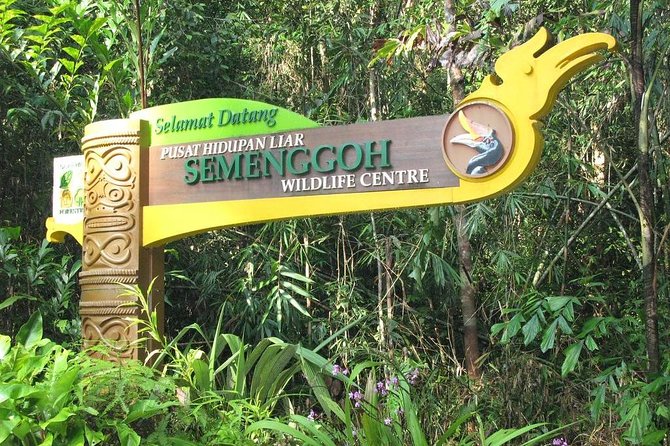
Semenggoh Wildlife Centre stands out globally as an exemplary model for ethical wildlife tourism and orangutan conservation. While other destinations around the world offer orangutan encounters, few match Semenggoh’s commitment to animal welfare, genuine rehabilitation, and responsible tourism practices.
The Critical Conservation Context
To understand why Semenggoh matters, it’s essential to grasp the orangutan crisis. The Bornean orangutan population has collapsed by approximately 80% in less than 50 years—declining from around 288,500 individuals in 1973 to just 57,350 today. Between 1999 and 2015 alone, more than 100,000 Bornean orangutans were lost due to habitat destruction, with global demand for palm oil, coal, and timber driving catastrophic deforestation. All three orangutan species are now classified as Critically Endangered, with expert projections warning of potential extinction within 50 years if current trends continue.
This crisis makes conservation efforts like Semenggoh’s not merely important but essential for the species’ survival.
A Completely Free-Roaming, Non-Captive Model
What Distinguishes Semenggoh from Other Facilities:
Unlike conventional zoos or even many other rehabilitation centers, Semenggoh operates without cages or fences. The approximately 30-40 orangutans living there are genuinely semi-wild, spending most of their time roaming freely throughout the protected 653-hectare rainforest reserve. This fundamental difference cannot be overstated—these are not confined animals performing for tourists.
The orangutans choose whether to visit the feeding platforms twice daily. During fruiting season (November-March), when natural food is abundant in the forest, many orangutans skip the feedings entirely and forage independently. This voluntary attendance is a primary indicator of ethical practice. As one expert evaluation notes, “During fruiting season you can hardly find any orangutans around the feeding grounds as they’re all off in the jungle hunting their own fruits,” demonstrating the animals have retained their natural foraging abilities.
This contrasts sharply with problematic facilities in Indonesia where orangutans have become dependent on supplementary feeding, a sign that they have lost natural survival capabilities. At Semenggoh, the ability of orangutans to skip feedings entirely proves they remain genuinely wild in behavior and instinct.
Genuine Rehabilitation, Not Permanent Captivity
Established in 1975, Semenggoh was originally designed as a true rehabilitation center where injured, orphaned, or illegally-kept orangutans would be nursed back to health and reintegrated into the wild. The center successfully rehabilitated numerous animals and then released them into the protected forest reserve.
The Breeding Program Success:
What makes Semenggoh particularly remarkable is that its colony now includes multiple generations of wild-born offspring. The original rehabilitated orangutans have had babies while living freely in the forest reserve, and those babies have now had their own young. This is a conservation triumph—it demonstrates that released orangutans can survive independently, reproduce naturally, and establish self-sustaining populations.
Unlike facilities that maintain animals permanently for viewing purposes, Semenggoh represents success that eventually eliminates the need for human intervention.
Prioritizing Animal Welfare Over Tourism Revenue
Strict Visitor Boundaries:
Semenggoh maintains firm boundaries between visitors and orangutans. Direct physical contact is strictly prohibited, and visitors must maintain a safe distance at all times. This approach aligns with IUCN (International Union for Conservation of Nature) best practice guidelines, which explicitly state that tourism should not interfere with animals in rehabilitation or with their ability to successfully return to the wild.
In stark contrast, many problematic facilities in Indonesia and elsewhere allow visitors to pet, hug, or hand-feed baby orangutans. Such direct contact causes multiple harms: it transmits zoonotic diseases, prevents animals from learning to fear and avoid humans (essential for wild survival), and causes psychological stress. Semenggoh categorically rejects this exploitative model.
Ranger-Maintained Safety:
Experienced rangers manage all visitor interactions, guiding behavior and ensuring orangutan welfare is never compromised for tourism convenience. Senior rangers have worked at Semenggoh for decades, building genuine relationships with individual animals based on trust rather than exploitation. One long-serving ranger described how orangutans recognize his voice and have picked ants off his shoulder—relationships built on respect, not handling or training.
Comparison to Other Destinations
Semenggoh vs. Sepilok (Malaysian Sabah):
Semenggoh compares favorably to Sepilok, Malaysia’s other major orangutan center. Conservationists who have evaluated both centers note crucial differences: at Semenggoh, orangutans maintain greater independence from human feeding and retain stronger foraging abilities. Wild food sources at Semenggoh mean animals genuinely choose whether to visit feeders, whereas at Sepilok, orangutans show greater dependency on human-provided meals. Additionally, Semenggoh has more ranger presence and better visitor management.
Semenggoh vs. Indonesian Facilities (Tanjung Puting, others):
Tanjung Puting in Indonesia, while doing important conservation work, illustrates the tension between tourism and conservation. Visitation has increased from just a few boats per week in the 1970s to approximately 8,000 visitors annually, creating pressure on the animals and their habitat. Fred Galdikas, founder of the Orangutan Foundation International and a renowned orangutan researcher, emphasizes the fundamental conflict: “They were not put here for tourists. This is where they live… but their habitat is being destroyed”. While Tanjung Puting cannot control wild orangutan behavior, Semenggoh’s structured, limited-capacity model prevents such visitor pressure from compromising animal welfare.
The Ethical Standards Framework
IUCN Guidelines Compliance:
Semenggoh operates within rigorous international standards. The IUCN guidelines for great ape tourism explicitly require that:
- No tourism should occur with reintroducible animals in rehabilitation
- Public interaction must never interfere with release preparation
- Disease transmission risks must be managed through strict distancing
- Animals should never be trained to perform or interact with tourists
Semenggoh meets all these standards, while many facilities worldwide do not.
Disease Prevention and Animal Health:
Unlike facilities that permit tourist interaction, Semenggoh’s distance protocols protect orangutans from human-transmitted diseases—a critical concern since orangutans share approximately 97% of human DNA and are susceptible to the same illnesses. Zoonotic disease transmission is a documented problem at facilities allowing close contact.
Research and Educational Contribution
Beyond tourism, Semenggoh functions as a genuine research and educational institution. The center conducts behavioral studies, contributes to conservation biology knowledge, and operates educational programs that inform the public about orangutan plight and deforestation threats. Revenue from tourism directly supports these conservation and research activities rather than existing solely to generate profit.
Transparency About Limitations
Semenggoh operates with refreshing honesty about what it is and isn’t. Sightings are never guaranteed, particularly during fruiting season. This transparency—refusing to artificially guarantee encounters through feeding or training—reflects genuine animal welfare priorities. Many exploitative facilities guarantee sightings by keeping animals habituated or partially captive.
Supporting Conservation Work
Your visit to Semenggoh directly contributes to ongoing conservation. Visitors can participate in the Orangutan Adoption Program (RM 200/year per animal), with proceeds funding care, research, and conservation initiatives. More broadly, the reserve operates as a protected habitat where orangutans can live with security denied to them throughout the rapidly deforesting landscape of Borneo.
Why This Matters for Responsible Travel
The fundamental principle distinguishing Semenggoh from problematic facilities is this: the animals’ welfare comes before tourism convenience. The orangutans at Semenggoh remain genuinely wild, capable of independent survival, free from cages or coercion, and protected from human interference that would compromise their rehabilitation.
Visiting Semenggoh means supporting a conservation model that prioritizes the long-term survival and dignity of endangered orangutans over short-term profit. It means standing against the exploitative wildlife tourism industry that has created suffering for countless animals globally. When you choose Semenggoh over problematic facilities, you’re investing in a future where these magnificent “people of the forest” can thrive.