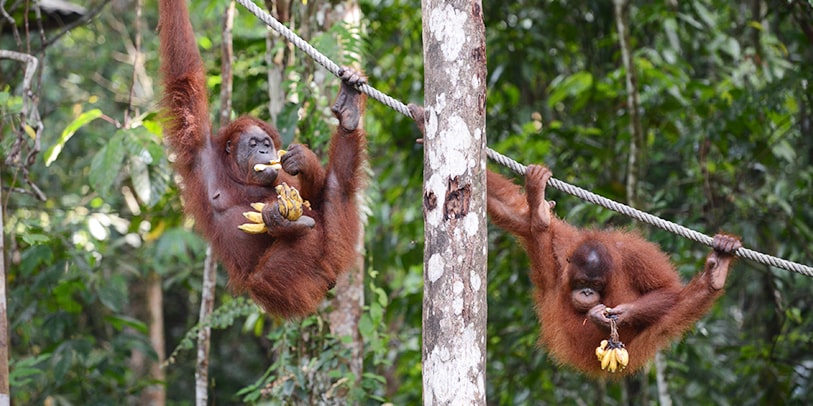
The anticipation builds during the 35-minute taxi ride from Kuching. You’ve researched Semenggoh Wildlife Centre extensively—read about its conservation success, studied feeding times, booked your tickets online. But nothing quite prepares you for the reality of standing in a rainforest clearing, waiting to see one of Earth’s most endangered species just 10 meters away. Here’s what actually happens when you visit as a first-timer.
Arrival and First Impressions
You arrive at the entrance around 8:30 AM, 30 minutes before the 9:00 AM feeding—following the sage advice of everyone online. The entrance building is modest, almost underwhelming. A small covered pavilion, basic information boards, and a display case featuring an orangutan skeleton (a sobering reminder of territorial conflicts in the colony). You purchase your RM 10 ticket and feel a rush of anticipation mixed with skepticism. Will I actually see orangutans?
The ranger conducts a safety briefing that varies dramatically depending on the season. If you’re visiting during fruiting season (November-March), the ranger’s tone is distinctly cautionary—almost apologetic. You hear something like: “There is a very low or zero percent chance you will see them today, but this is actually good because it means there is fruit in the forest and our rehabilitation is working.” It’s a statement designed to manage expectations, and it works. You nod, understanding the conservation philosophy, but your heart sinks slightly.
If you’re visiting during the dry season (April-October), the ranger’s tone is noticeably more upbeat.
The Walk to the Feeding Platform
It’s only a 3-5 minute walk from the briefing area to the viewing platform. The jungle closes around you—dense green, the humid air thick enough to feel substantial. Your breathing adjusts to the moisture-laden atmosphere. The ground is level, well-maintained, paved in places. The walk is entirely manageable; even visitors with mobility challenges report being able to manage it with the optional buggy service.
Then you reach the clearing. A wooden platform emerges from the jungle, surrounded by forest on all sides. It’s intimate and disorienting simultaneously—you’re standing in actual rainforest, not a manicured zoo. To your right, approximately 10 meters away, is the orangutan feeding platform—a simple wooden structure where fruit will soon be placed. This is where they appear, if they appear at all.
You find a good viewing spot and settle into the waiting. This is where the experience diverges dramatically depending on luck.
Scenario A: The Lucky Encounter (April-October, Non-Fruiting Season)
The ranger checks his watch: 8:50 AM, just minutes before feeding time. Around you, perhaps 20-30 other visitors have assembled (it’s quieter on weekdays, busier on weekends). A hushed anticipation settles over the group.
At 9:00 AM sharp, rangers place fruit on the feeding platform—bananas, papayas, sweet potatoes, coconuts, hard-boiled eggs. They begin making distinctive calls into the forest—”Come on, come on!”—vocalizations that the orangutans have learned to recognize.
For a few moments, nothing. You squint at the canopy, looking for movement. Then, almost imperceptibly, branches begin to move. Not wind—deliberate movement. Your breath catches.
Suddenly, a massive silhouette emerges from the trees. The alpha male appears first, often—massive, reddish-brown, moving with surprising grace despite his bulk. This is likely Ritchie, the iconic 50+ year old dominant male who has ruled Semenggoh’s colony for decades. He descends to the platform with calculated movements, almost balletic. He sits on the wooden structure and begins methodically eating bananas, one by one, with surprising gentleness. The contrast between his sheer size and his delicate eating motion is striking.
Then comes the moment that changes the visit: a female emerges, and clinging to her back is an infant—perhaps only a year old. The baby grips tightly as the mother swings gracefully down, her movements perfectly adapted to supporting the additional weight. She reaches the platform and begins eating while the baby clings to her fur.
You raise your camera—if you have one—but many visitors report putting it down after a few moments, overwhelmed by the privilege of witnessing this. One traveler described it: “I saw a mother with an adolescent and a baby still clinging to her. A rare sighting! So special.”
The rangers provide running commentary, full of humor and knowledge. They point out the individual orangutans by name, share stories about their personalities, explain behaviors. You learn that the mother you’re watching is someone—not just “an orangutan,” but Selina, who gave birth to this baby after a period of rehabilitation. The specificity transforms the encounter from observation to relationship.
Duration and Reality: This lasts roughly 45 minutes to an hour. The orangutans eat their fill, then—remarkably—they leave. They’re not forced to stay. At approximately 9:45-10:00 AM, the mother collects her baby and swings back into the forest canopy. Other individuals may come and go.
You stand there, trembling slightly, having witnessed something profoundly moving. One reviewer wrote: “Absolutely incredible experience that I highly recommend to anyone travelling to Kuching! The fact that the Orang-utans are wild makes seeing them so much more special. We got to see a mum with an adolescent and a baby still clinging on to her; a rare sighting! So special. I would definitely go back!”
Scenario B: The Challenging Experience (Fruiting Season or Unlucky Day)
It’s 9:15 AM. The fruit sits on the feeding platform untouched. The rangers have called repeatedly—their voices carrying into the canopy. Nothing.
The group waits. Thirty minutes pass. Forty-five minutes. Your legs ache from standing. Doubt creeps in. Were the orangutans even here this morning? Are they choosing to forage in the forest instead?
One ranger eventually spots a smaller orangutan approaching, but it stays at the edge of the clearing, cautious. It eats some fruit quickly and departs. That may be the only sighting of the day. The group disperses at 10:00 AM, disappointed but philosophically resigned.
One honest review captures this experience: “We kept waiting from 9am to 9.45am but still no Orang Utan showed up. According to the staff, this means the Orang Utan can find the food themselves so not need to come for the feeding… Maybe be disappointed for visitor but it is a good sign for the Orang Utan.”
Statistics show that during fruiting season, sightings are dramatically lower. Some research indicates approximately 50% probability of seeing at least one orangutan per visit. Some visitors visit twice (they can reuse their ticket) and fail to see any animals either time.
The Emotional Reality
For many first-timers, the experience proves more emotionally intense than anticipated. Visitors report being overwhelmed by the human-like qualities of the orangutans—their facial expressions, the obvious intelligence in their eyes, the tenderness between mothers and infants.
One traveler who previously saw wild orangutans in Sumatra wrote: “Seeing orangutans in the wild left us with goosebumps. We could see their facial expressions. And their eyes! It was almost like looking in a mirror! The hands of the orangutans were incredibly human-like; just larger and much more powerful.”
Even observers who fail to see orangutans often report cathartic experiences. Understanding that the orangutans’ absence is actually a conservation success story reframes disappointment into philosophical acceptance.
The Physical Experience: What Your Body Tells You
The humidity is relentless. If you’re from a temperate climate, your shirt will be soaked within 10 minutes. The heat isn’t oppressively hot (it’s tropical, not desert), but the moisture makes breathing feel substantial. Stay hydrated—the visitor center has limited vending machines, so bring water.
The jungle sounds are constant—insect calls, bird cries, rustling leaves. Silence never quite arrives; instead, you exist within a constant, soothing soundscape.
If orangutans don’t appear, you’ll likely spend 1-2 hours standing. Comfortable shoes are genuinely important. The walk to the platform is only 3-5 minutes, but the waiting involves extended standing.
The Afternoon Option
Many visitors choose both feeding sessions—morning and afternoon (3:00-4:00 PM). Between feedings, you can explore the visitor center (modest but informative), eat lunch at the basic cafe, or walk surrounding trails. This extends your visit to 5-6 hours but dramatically increases your chances of seeing orangutans.
Multiple reviews mention staying for both sessions and having substantially different experiences. One visitor saw nothing at the morning feeding but spotted 5 orangutans at the afternoon session.
Unexpected Moments
Some visitors report surprising encounters that rival the formal feeding times. One reviewer recounted: “We arrived at a covered rendezvous point, and right there was an orang-utan sat eating sugar cane and another was swinging close by, before we even went to the feeding platform.”
Occasionally, visitors see orangutans along the paths between the entrance and feeding platform. The semi-wild nature of the sanctuary means encounters can occur anywhere within the reserve.
The Post-Visit Reflection
Walking back to the entrance, whether you saw orangutans or not, something has shifted. You’ve entered an actual rainforest habitat where endangered apes live freely. You’ve absorbed the reality that these animals chose whether to visit the feeding platform—they weren’t caged, forced, or coerced.
One review perfectly captured this: “While it never feels like you’re on a remote wilderness adventure, the national park staff manage to maintain a good balance between providing a safe space for the orangutans and an interesting and successful visit for the humans.”
Honest Advice for Future First-Timers
1. Manage Expectations About Guarantees
Sightings are genuinely not guaranteed, despite cost and effort. This isn’t a failure of the facility—it’s proof the rehabilitation works. Accept this philosophical framework before visiting, and disappointment transforms into appreciation.
2. Timing is Critical
Visit during non-fruiting season (April-October) if orangutan sighting is your primary goal. May-June offer statistically the highest sighting probability. If you visit November-March, acknowledge that seeing any orangutan is genuinely fortunate.
3. Arrive Early, Stay Long
Arriving 30 minutes before feeding time secures good viewing positions and helps you adjust to the environment. Staying for both morning and afternoon sessions doubles your chances.
4. Avoid Weather Complications
Rain doesn’t eliminate sightings, but orangutans are genuinely happier in good weather and more likely to visit feeders on sunny mornings. Check forecasts and prioritize clear-weather visits if possible.
5. Bring Proper Gear
- Comfortable walking shoes
- Water bottle
- Camera without tripod
- Insect repellent
- Light rain jacket
6. Weekdays vs. Weekends
Weekday visits offer significantly fewer crowds, potentially allowing the orangutans to feel less pressured and be more likely to visit feeders.
7. Embrace the Unpredictability
The most memorable wildlife experiences occur when expectations are relinquished. Wildlife exists on its own terms, not for human entertainment. If you can adopt this philosophical stance, disappointment becomes impossible—you’ve already won simply by entering the forest where wild orangutans live.
The Lasting Impact
Nearly every visitor—whether they saw orangutans or not—reports the visit as memorable. The combination of authentic rainforest immersion, genuine wildlife observation ethics, and the profound realization that these remarkable animals exist in your world creates a lasting impression.
As one first-timer summarized: “The opportunities for viewing and spending time in the company of orangutans are sadly becoming increasingly rare. Semenggoh Wildlife Centre provides an accessible and natural place to visit these beautiful creatures, all within a short drive of Kuching. If you’re visiting Kuching with kids, it’s a must-do visit and something you’ll all remember for years to come.”
That, ultimately, is the real Semenggoh experience—not a guaranteed performance, but a genuine encounter with endangered wildlife and the conservation efforts protecting it. And that’s something far more valuable than any predictable zoo experience could ever provide.