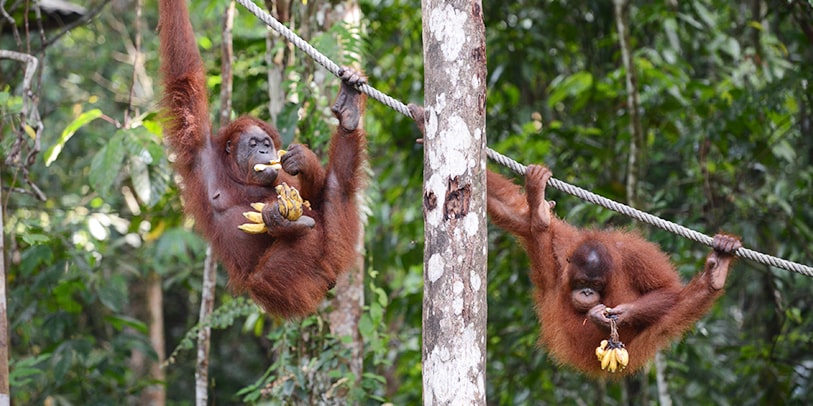
While orangutan feeding times are undoubtedly Semenggoh’s primary draw, the 653-hectare nature reserve offers far more than just primate encounters. The reserve functions as a complete rainforest sanctuary, providing diverse experiences for nature enthusiasts, photographers, botanists, and adventurers seeking authentic Borneo wildlife and ecology.
1. Bird Watching and Avian Photography
Semenggoh is a birdwatcher’s paradise, home to numerous Bornean endemic and migratory species. Early morning (6:00-8:00 AM) offers the most active birdwatching, when the forest canopy resonates with avian calls.
Notable Species to Look For:
- Hornbills – Eight species inhabit Borneo, making them among the most iconic sightings
- Kingfishers – Brilliant blue and green plumaged species frequenting forest streams
- Sunbirds – Iridescent smaller birds attracted to flowering plants
- Eagles and raptors – Including fish eagles and forest eagles
- Owls – Nocturnal species occasionally heard during dusk visits
Pro Tips:
Bring binoculars and a bird identification guide specific to Borneo. The quieter early morning session, before crowds arrive, yields the best sightings and photography opportunities. Patient waiting near the visitor center or along jungle trails increases your chances of capturing memorable photographs.
2. Explore Indigenous Plant Life and Botanical Gardens
The reserve contains over 541 tree species within its primary lowland mixed dipterocarp forest. The Botanical Research Centre (BRC), established in 1976 within the reserve, maintains 22 hectares of specialized gardens showcasing Sarawak’s diverse flora.
What You’ll Encounter:
- Dipterocarp trees – Massive canopy emergents that dominate lowland Bornean forests, with specimens over 200 years old
- Endemic species – Including Areca Ahmadii (a palm species found only at Semenggoh) and approximately 9 other endemic plant species
- Medicinal plants – Used traditionally by indigenous Bornean peoples
- Exotic flowering plants – Orchids, heliconias, and other tropical varieties
Specialty Gardens at BRC:
The center includes orchid gardens, medicinal plant collections, and propagation nurseries where you can learn about conservation efforts to protect rare species.
Educational Aspect:
Knowledgeable guides explain medicinal properties, cultural significance, and conservation challenges facing Borneo’s flora. This is ideal for travelers interested in ethnobotany and sustainable plant use by indigenous communities.
3. Rainforest Nature Walks and Jungle Trekking
Beyond the main 1.6 km trail to the feeding platform, Semenggoh offers multiple jungle trails through authentic primary rainforest.
Trail Experience:
A typical nature walk winds beneath towering dipterocarp trees, past streams and natural clearings, with interpretative signs explaining rainforest ecology. The main trail from entrance to feeding platform (30-minute walk) passes through representative forest habitats.
What to Observe Along Trails:
- Buttressed root systems – Massive trees with spreading root bases adapted to rainforest soil
- Epiphytes and vines – Orchids and other plants colonizing tree bark
- Leaf litter diversity – Insects, fungi, and decomposition processes
- Forest stratification – Understanding distinct canopy layers from emergent to understory
Important Note: Some previously open hiking trails have been closed due to occasional aggressive orangutan encounters. Check current trail access with rangers upon arrival, as safety protocols may restrict certain paths.
4. Wildlife Photography Opportunities
Semenggoh provides exceptional photography opportunities for both professional and amateur photographers.
Photography Subjects Beyond Orangutans:
- Gibbons – Fast-moving but vocalizations help locate them in canopy
- Giant squirrels and pygmy squirrels – Hidden high in trees, requiring patience
- Macaques – Social primates often seen in groups
- Insects and butterflies – Particularly abundant during wet season
- Forest landscape photography – Canopy layers, early morning mist, and dramatic lighting
Photography Tips:
- Avoid flash and tripods, which disturb wildlife
- Early morning light through the canopy creates stunning atmospheric photographs
- Patience is essential—wait quietly for wildlife to approach
- A telephoto lens (200-400mm) is valuable for canopy subjects
The visitor center area sometimes hosts photographing wildlife in relatively open spaces where composition is easier.
5. Study Diverse Bornean Wildlife Beyond Primates
While orangutans dominate attention, Semenggoh hosts numerous other species representative of Borneo’s megafauna.
Common Wildlife (besides orangutans and gibbons):
- Giant squirrels – Remarkable tree-dwelling rodents
- Pygmy squirrels – Tiny endemic species
- Proboscis monkeys – The unique “Dutch monkeys” with distinctive large noses, though more commonly seen in other reserves, occasional individuals inhabit nearby areas
- Macaques – Social monkeys often visible in feeding troops
- Slow lorises – Venomous nocturnal primates (rare sightings; visitors should keep distance)
- Civet cats and other carnivores – Elusive but present
- Reptiles and amphibians – Including various snake species, monitor lizards, and frogs
Observation Strategy:
Quiet, patient observation during early morning and late afternoon increases wildlife sightings. Rangers can point out recent animal activity and likely locations.
6. Educational Programs on Conservation and Rehabilitation
Semenggoh functions as an active research and education center, not merely a tourist attraction.
Learning Opportunities:
- Ranger talks – Pre-feeding briefings explain orangutan behavior, diet, rehabilitation process, and individual animal histories
- Information center displays – Detailed educational exhibits on Semenggoh’s 50-year conservation history, the rehabilitation program’s success, and resident orangutans’ family trees
- Research insights – The center conducts ongoing behavioral and ecological studies
- Conservation lessons – Understanding habitat destruction, deforestation impacts, and why rehabilitation programs are essential
Deeper Learning:
Visitors can learn how rescued orangutans regain survival skills, how the reserve successfully reintroduced animals into wild populations, and why Semenggoh’s semi-wild model differs from captive facilities.
7. Botanical Research Station and Arboretum Exploration
The Semenggoh Arboretum, containing over 2,837 recorded trees across 4 hectares, represents one of the world’s richest tropical forest documentation efforts.
Arboretum Significance:
- Scientific value – A living reference collection for Borneo’s tree diversity
- Rare species seed bank – Semenggoh maintains seeds from endangered trees for future reforestation
- Research hotspot – Scientists study forest demographics, regeneration, and biodiversity patterns
What Visitors Can Experience:
Walking the arboretum (with guide assistance), you encounter the forest not as chaotic jungle but as an organized, scientifically documented ecosystem. You learn which trees reach 40+ meters height, which species are keystone food sources for orangutans, and which rare species require active conservation.
Endemic Plant Focus:
At least 9 plant species are endemic to Semenggoh, found nowhere else on Earth. Seeing these species emphasizes the reserve’s irreplaceable biodiversity value.
8. Rainforest Kayaking Combination Tour
For active travelers, several outfitters combine Semenggoh with rainforest kayaking on the Sarawak River.
Combined Experience:
- Morning: 4-6 km kayaking through pristine rainforest waterways on the Sungai Sarawak
- Stopover activities: Fish feeding, riverbank swimming
- Lunch: Authentic Malaysian ethnic cuisine in a riverside village
- Afternoon: Proceed to Semenggoh for afternoon feeding session
Physical Requirements:
Moderate fitness level; suitable for most ages with assistance. The kayaking portion is leisurely paddling, not technical white water.
Duration: 6 hours total ($156 per person typically includes hotel pickup, guide, meals, and admission)
This combination maximizes your Sarawak nature exposure in a single day, pairing rainforest waterway exploration with wildlife sanctuary experience.
9. Picnicking and Immersion in the Rainforest Canopy Environment
Unlike typical wildlife centers with rushed visits, Semenggoh allows genuine immersion in the rainforest environment.
Visitor-Friendly Amenities:
- Cafes and rest areas – Basic facilities near the entrance provide refreshment
- Seating areas – The feeding platform and surrounding jungle areas have benches for extended observation
- Lunch options – Pack a picnic or eat at the center’s cafe to extend your stay
Deep Rainforest Experience:
Spend several hours (morning feeding + afternoon feeding + exploration between) to truly experience the forest’s rhythm. Sit quietly for extended periods to observe how the forest canopy changes light, hear the symphony of bird and insect calls, and potentially witness wildlife during less-crowded intervals.
Sensory Engagement:
Experience the humid, warm rainforest air, the rich smell of decomposing vegetation, the complex soundscape of the jungle, and the visual complexity of the multi-layered forest.
10. Cultural Integration with Nearby Sarawak Tourism
Semenggoh can be combined with cultural experiences to create a comprehensive Borneo adventure.
Nearby Attractions (Day Trip Combinations):
Sarawak Cultural Village:
Only 30-45 minutes from Semenggoh, the Cultural Village showcases the traditional lifestyles, arts, crafts, and performances of Sarawak’s seven main ethnic groups (Melanau, Penan, Iban, Bidayuh, Orang Ulu, Malay, and Chinese).
An 8-hour combined tour visits both Semenggoh and the Cultural Village, offering cultural passport stamps at each ethnic house and scheduled cultural performances.
Bako National Park:
Approximately 37 km from Kuching (45 km from Semenggoh), Bako offers complementary wildlife experiences with proboscis monkeys, bearded pigs, monitor lizards, and diverse coastal and forest habitats.
Package Tour Benefits:
Combined packages (RM 945+ for 4 days/3 nights) include Kuching city tour, Bako National Park, Semenggoh, and Sarawak Cultural Village, providing comprehensive exposure to Sarawak’s natural and cultural heritage.
Planning Your Multi-Activity Semenggoh Visit
To maximize your experience beyond orangutan watching:
Full-Day Itinerary (8+ hours):
- 8:00 AM – Arrive early for morning trail exploration and birdwatching
- 9:00 AM – Morning orangutan feeding session
- 10:30 AM-1:00 PM – Explore botanical gardens, walk trails, photograph wildlife
- 1:00 PM-2:45 PM – Lunch at center or nearby
- 3:00 PM-4:00 PM – Afternoon orangutan feeding
- 4:00 PM onwards – Extended jungle exploration, wildlife observation, or proceed to nearby attractions
Required Preparation:
- Binoculars for birdwatching
- Camera with zoom lens
- Insect repellent
- Comfortable hiking shoes
- Rain jacket (weather can be unpredictable)
- Water bottle and snacks
Semenggoh transcends a simple wildlife viewing location—it’s a complete rainforest classroom, research station, and conservation success story where visitor experience integrates education, ecology, and genuine wildlife immersion.